
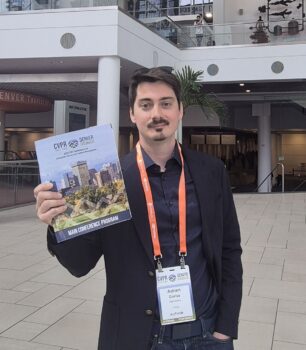
Feedback from my incredible experience at CVPR last week!
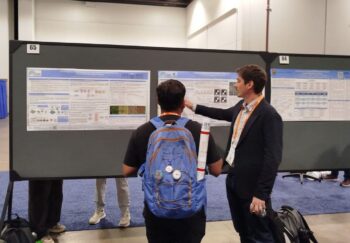
I had the opportunity to present our latest work on onboard restoration for remote sensing applications, which aims to improve how we think about edge AI in space (CVPR 2026 Open Access Repository).
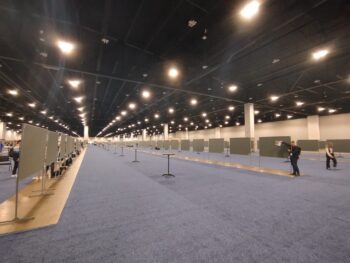
But I was not alone here, because more than 4,000 of us presented posters. I still can’t wrap my head around it!
Anyway, it was an opportunity to see what the best of the best were working on, and my god, it was inspiring!
Here are some of my takeaways:
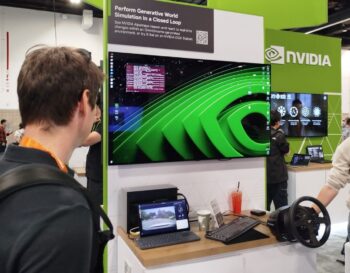
World models are becoming more and more reliable, as demonstrated at the NVIDIA booth by Guillermo García Cobo, who showcased the new capabilities of Cosmos for autonomous driving simulations.
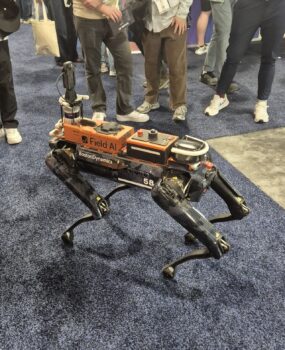
Robots are everywhere, and from everywhere Sudo AI, Fourier, Unitree Robotics… I was particularly interested in the cute FieldAI robot, where Ron Aich explained all the amazing tech at work!
When most try to add more sensors, Wanjia Fu did an amazing job by using joint torques and position to enable tactile interactions. As a former mechanical engineer, I love the approach!
(UniTac paper)
Bio-inspired AI might come back! With an amazing keynote by Thomas Serre from Brown University, who plans to bring RNN back (I find it exciting), and Yusen Cai, who aims to improve models by mimicking infant perceptual development.
(Learning through baby eyes paper)
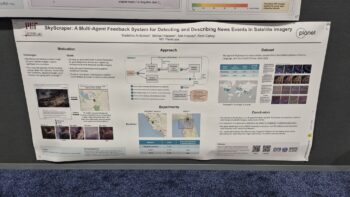
New datasets for change detection will soon be available, thanks to the work of Madeline Loui Anderson and Planet, which aims to track global events through text articles! We will surely need the data for our work with Thomas Goudemant on Transformers for change detection!
(A Multi-Agent Feedback System for Detecting and Describing News Events in Satellite Imagery)
Edge AI for space is getting stronger (and for the best!), with initiatives such as STAR.VISION Aerospace or Infinite Orbits that provide a wide variety of services.
Always nice to see the future of AI unfolding before your eyes!